
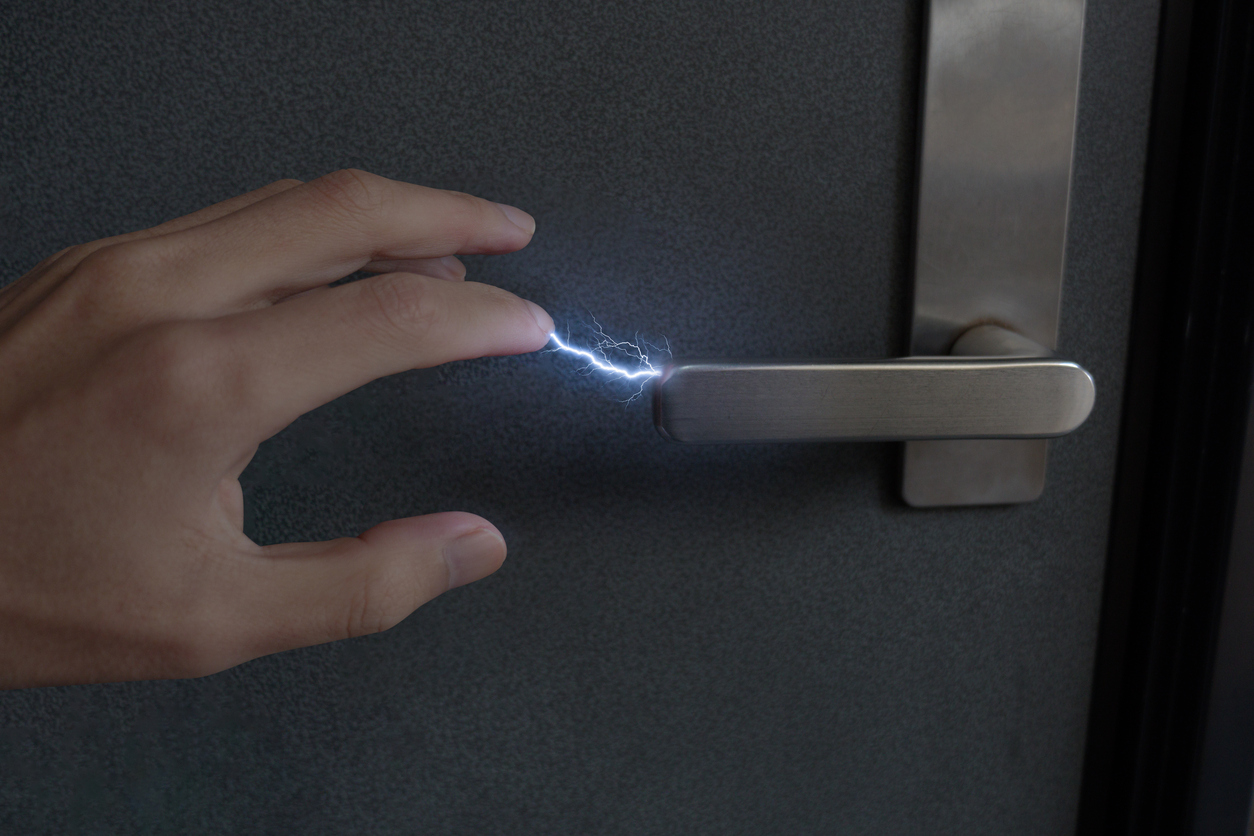
 Everyone of us has experienced an electrostatic discharge event commonly referred to as an “electrostatic shock”. Walk across a carpet and you will most likely generate and accumulate enough static electricity (electrostatic charge) to experience a sudden and sometimes painful electrostatic discharge event producing a spark. The spark you experience is the result of the accumulated electrical charge flowing from you to a close metallic object.
This electrostatic discharge spark occurs within billions of a second and is not normally harmful to humans, but may raise havoc on your electronic equipment, especially on your computer and computer peripherals. Voltages in excess of 15,000 volts and discharge currents exceeding many amperes can be easily generated within the spark!
This large amount of electrical energy can easily destroy your electronic devices including your computer and keyboard, LCD screens, USB devices such as memory sticks and key or license fobs, cell phones, portable disk drives, and many other electronic devices, along with the data stored within these devices. For a more in depth understanding of this topic, please refer to the article “Why is Static Electricity Harmful to Computers?”.
Over time, electrostatic discharge events are cumulative and will eventually harm, or worse, destroy your electronic devices and corrupt the data stored in these devices. You may suddenly experience a complete operational failure of your computer or other electronic devices if the electrostatic discharge is significant, losing your data or worse destroying your computer’s sensitive electronic circuits. Or you may not initially notice any performance degradation in your equipment’s performance or loss of data, but eventually your equipment will fail and/or you will begin to lose data. Electrostatic discharge events are the “silent killers” of electronic devices.
The patent-pending BumbleBee models were designed to efficiently protect your working environment and prevent electrostatic discharges from destroying your equipment and any associated stored data. Instead of discharging your accumulated charge through your computer, you simply touch the discharge pad and safely discharge the accumulated charge through BumbleBee instead of your computer. Discharging yourself using BumbleBee protects the sensitive electronic circuits of your computer from any destructive electrostatic discharge events.
By simply plugging in the USB plug into a compatible grounded USB receptacle, the BumbleBee system begins to protect your devices and the stored data from potential electrostatic discharge destruction. The BumbleBee system provides you with a safe and controlled method for you to discharge yourself and maintain a safe ESD work environment.
The BumbleBee system also provides a programmable visual and audio alert system to inform you when it is time for you to discharge yourself and eliminate any accumulated electrostatic charge.
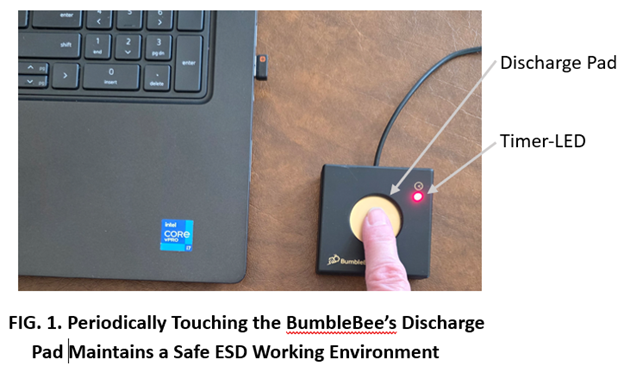
By simply touching the gold-plated discharge pad as shown in FIG. 1, any accumulated electrostatic charge is safely and controllably neutralized keeping your electronic equipment and any previously stored data safe from destructive electrostatic discharge damage.
The Timer-LED blinks red to indicate that you have successfully touched the discharge pad and have neutralized any accumulated electrostatic charge on your person. With the BumbleBee’s controlled discharge technology, the “zap” experience has been completely eliminated.
Just think how long it would take you to recreate a week, months or a years’ worth of data and files, or how expensive it would be to replace your laptop computer, an LCD computer display or your portable disk drive?
To learn more, please refer to this article and video “How to Operate the BumbleBee System” to see how easy it is to discharge yourself with the BumbleBee system and protect both your electronic equipment and devices, and any previously stored data within these devices, from electrostatic discharge damage.