

To understand static electricity (also referred to as electrostatics), we must first understand electric charge. Electric charge, like mass and volume, is an extensive physical property of matter. Matter is composed of atoms with each atom comprising neutrons, protons and electrons. Electrons and protons also have an additional property (attribute) called electrical charge, with electrons having the negative charge attribute and protons having the positive charge attribute. Neutrons are electrically neutral and have no charge attribute.
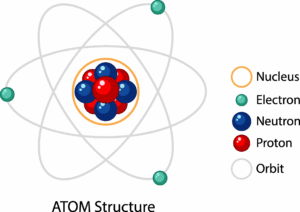 Matter is normally electrically neutral having an equal number of electrons and protons, but materials may gain electrons and become negatively charged and may lose electrons and become positively charged. It is also well known that objects having like charges experience a repulsive force and objects having opposite charges experience an attractive force.
Static electricity is simply an accumulation of immobile charge (hence the name static) versus moving charge (which is commonly referred to as an electric current). The accumulated immobile charge may be positive or negative. It should be noted that electrons, having a much higher mobility than protons, are much more easily transferred and accumulated on an object than protons.
Electrons are commonly transferred from one object to a second object by physically contacting or sliding the objects together. This phenomenon of electron transfer is referred to as the triboelectric effect and produces an accumulation of negative electric charge on the object gaining electrons and produces an accumulation of positive electric charge on the other object losing electrons.
For example, when a ballon is rubbed against certain fabrics will produce static electricity. The frictional contact between the ballon and the fabric produces a transfer of electrons from the fabric to the ballon, giving the ballon a negative static charge. Another example of producing static electricity is when you walk across a carpet with socks you will probably gain an accumulation of negative charge (you gain electrons and the carpet loses electrons) through the triboelectric effect.
An accumulation of negative charge will attract an accumulation of positive charge (oppositely charges attract), and when the accumulated negative charge comes close to an object that can provide positive charge, the accumulated negative charge becomes mobile and flows to the positive charge producing an electrostatic discharge event, a “spark”. The flow of negative charge to the positive charge neutralizes the accumulated negative charge.
The accumulated negative charge can produce voltages in excess of 25KV and force a current of many amperes during the electrostatic discharge event. This level of voltage and current can easily destroy electronic devices. The patent-pending BumbleBee systems neutralize any charge that you may accumulate in a controlled fashion and protects your electronic devices and your stored data.